Sciatica Treatment in Centreville, VA 2
| NPI: 1235461062 | Virginia Chiropractic License Number: 0104556840 | Last reviewed: August 25, 2026
Sciatica Treatment in Centreville, VA:
Evidence-Based, Non-Surgical Care
Table of Contents
- Quick Answer: Sciatica at a Glance
- Understanding Sciatica: What Is Happening to Your Nerve
- Sciatica Symptoms and How They Show Up Day to Day
- Why Sciatica Happens: Common Contributors and Drivers
- Sciatica Red Flags: When to Seek Urgent Care
- How We Assess Your Sciatica
- Your Personalized Treatment Plan: A Phased Care Ladder
- Evidence Snapshot in Plain Language
- A Representative Recovery Story
- Meet Your Chiropractor
- What Our Patients Say
- Watch: Sciatica Explained in 5 Minutes
- Free Sciatica Self-Care Guide
- Trusted Sciatica Care in Centreville
- References and Medical Review
- Sciatica FAQs

Quick Answer: Sciatica at a Glance
Sciatica is not a diagnosis on its own. It is a set of symptoms, usually pain, numbness, tingling, or weakness, that travels from the lower back through the buttock and down one leg along the path of the sciatic nerve. Most cases trace back to an irritated or compressed nerve from a herniated or bulging disc, spinal stenosis, age-related disc changes, or tension in the piriformis muscle. For the majority of people, first-line care is non-surgical and drug-free: staying gently active, targeted exercise, hands-on care, and time, since many episodes settle within several weeks. Seek urgent medical care right away if you lose bowel or bladder control, develop numbness around the groin or inner thighs, or notice rapidly worsening leg weakness.
Understanding Sciatica: What Is Happening to Your Nerve
The sciatic nerve is the largest nerve in your body. It forms from nerve roots in your lower spine (the L4 through S3 levels), runs deep through the buttock, and branches down the back of each leg to the foot. When one of those nerve roots or the nerve itself becomes irritated or compressed, the signal it carries gets disrupted. That is what produces the classic one-sided leg pain people describe as sciatica. Clinically, this nerve-root irritation is known as lumbar radiculopathy.
Most sciatica is acute, meaning it flares up and then gradually calms over a period of weeks as the irritated tissue settles. A smaller number of cases become persistent, lingering or returning over months, often when an underlying driver like prolonged sitting, weakness, or a disc issue has not been addressed. Knowing which pattern you are dealing with shapes the plan, and it is one of the first things we sort out together.
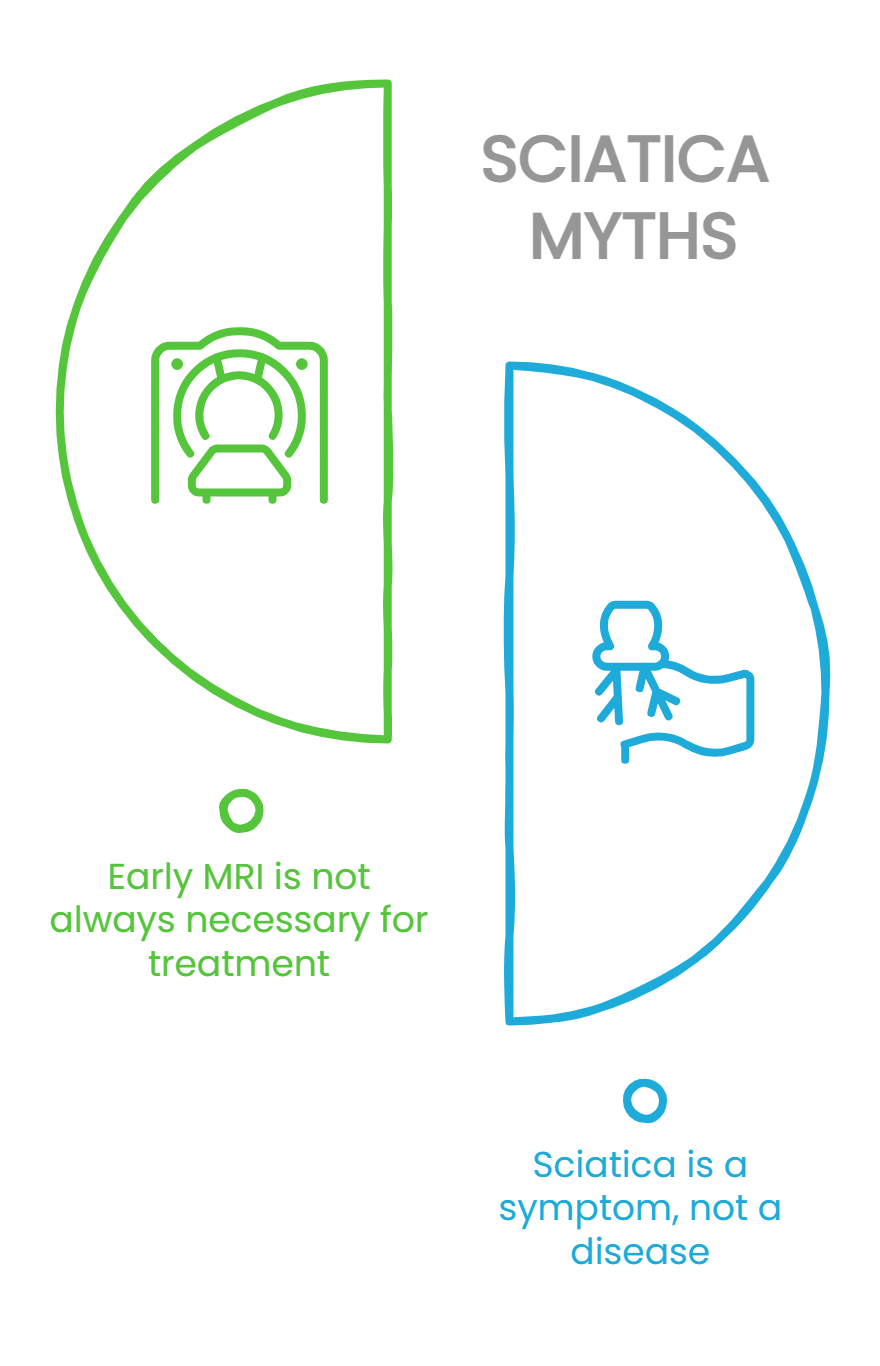
Two myths are worth clearing up. The first is that sciatica is a single disease you either have or do not have. It is really a symptom with several possible causes, which is why an accurate assessment matters more than a label. The second is that you need an MRI before anyone can help you. For most people, imaging in the early weeks does not change the plan and is not routinely recommended, a point we return to below.
Sciatica Symptoms and How They Show Up Day to Day
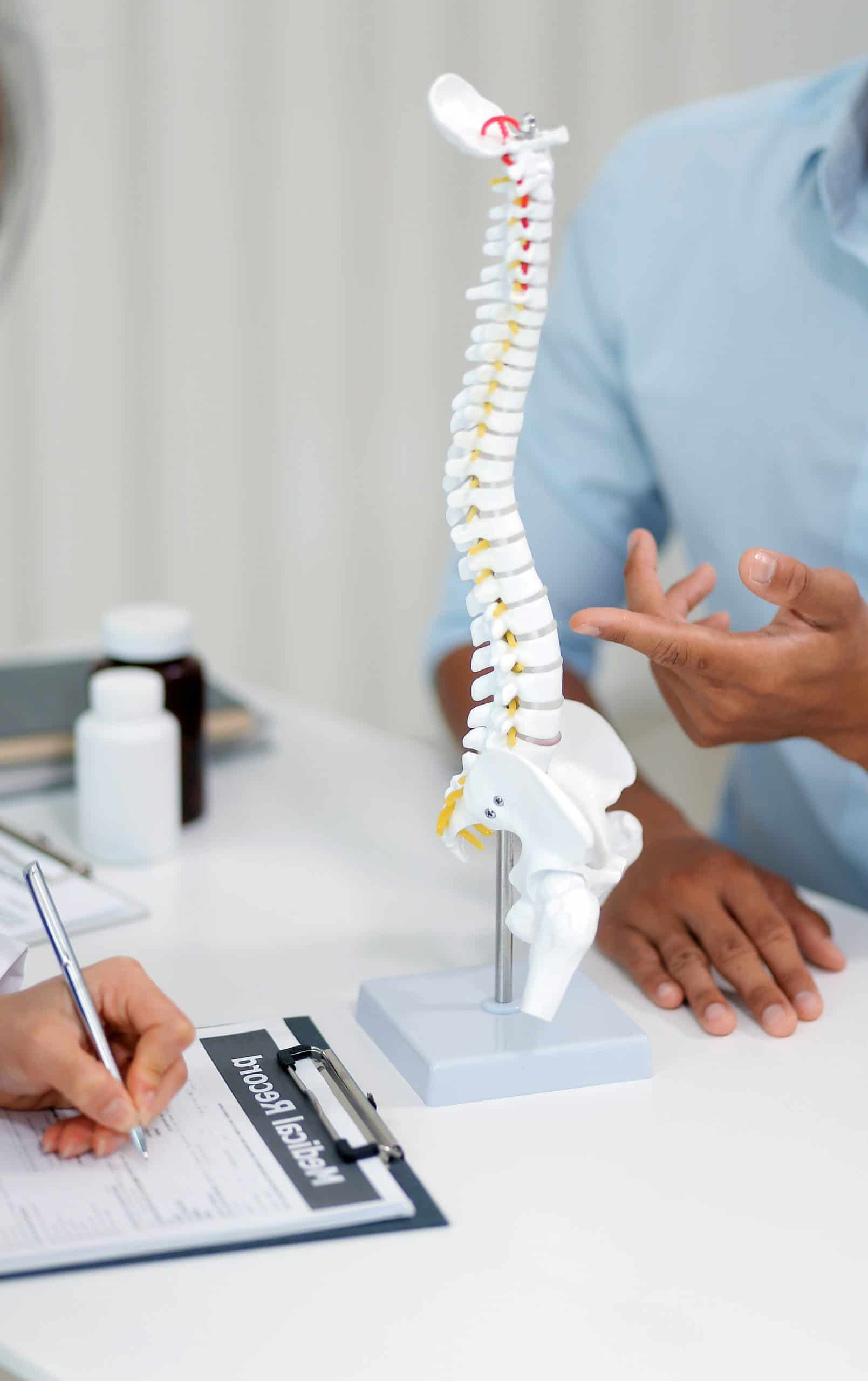
Sciatica feels different from ordinary muscle soreness because it follows the nerve. Common experiences include:
- A sharp, shooting, or electric pain running from the lower back or buttock down one leg
- Numbness and tingling down the leg, sometimes reaching the foot or toes
- A deep ache or burning sensation, often described as pain in the buttock radiating down the leg
- Lower back pain and leg pain together, with the leg symptoms frequently more bothersome than the back
- Weakness in the leg or foot, or a feeling that the leg is heavy or unreliable
Patterns matter as much as the symptoms themselves. Many people find their pain worsens with prolonged sitting, standing in one spot, bending forward, or sudden pressure such as a sneeze, cough, or laugh. Others feel relief when walking, lying down, or changing positions frequently. These aggravating and easing patterns are clues that help us pinpoint the source.
The day-to-day impact is real. Sciatica can interrupt sleep when you cannot find a comfortable position, make a desk job or a long commute genuinely uncomfortable, and pull you away from workouts, sports, or simply keeping up with your kids. You do not have to push through it alone, and you do not have to accept it as your new normal.

Why Sciatica Happens: Common Contributors and Drivers
If you are asking “why me,” the honest answer is usually a combination of factors rather than a single cause. We group them into three buckets.
Mechanical and structural factors. These are the physical sources of nerve irritation. A herniated or bulging disc is among the most common, where disc material presses on a nearby nerve root. Spinal stenosis, a narrowing of the spaces in the spine, can crowd the nerves, especially later in life. Degenerative disc changes, spondylolisthesis (a slight forward slip of a vertebra), or a tight piriformis muscle in the buttock can all play a role. A pinched nerve in the lower back is often the common thread.
Lifestyle and load factors. How you live loads your spine every day. Long hours of sitting, an inactive routine, repeated bending, twisting, or heavy lifting at work, and carrying extra body weight all raise the demand on your lower back. Conditions like diabetes can also affect nerve health over time. None of these guarantee sciatica, but they tip the odds.
A mismatch between capacity and demand. Sometimes the tissues simply have not kept up with what is being asked of them. When the muscles that support and move your spine are underprepared for a sudden increase in activity, a move, a new workout, a weekend project, an irritated nerve can be the result. The encouraging part is that capacity is trainable, which is a large part of why a structured plan tends to work.

Sciatica Red Flags: When to Seek Urgent Care
Most sciatica is not dangerous, but a small number of signs point to a problem that needs prompt medical evaluation rather than watchful waiting. Seek emergency care or call 911 if you experience any of the following:
- Loss of bowel or bladder control, or new difficulty starting or stopping urination
- Numbness in the groin, buttock, or inner thighs, sometimes called saddle numbness
- Weakness or numbness developing in both legs, or rapidly worsening weakness in one leg
These can signal a serious condition called cauda equina syndrome, which is a medical emergency. You should also contact a medical provider promptly if your leg pain follows a significant fall or accident, comes with a fever, or arrives alongside unexplained weight loss or a history of cancer.
Our philosophy here is simple and matches how we practice across the board: if your situation calls for a different kind of care, we will tell you and help point you in the right direction. Your safety comes before anything else.

How We Assess Your Sciatica
Good treatment starts with a clear picture, so your first visit centers on understanding your case rather than rushing to a one-size-fits-all routine.
We begin with your history. We want to hear how the pain started, where it travels, what makes it better or worse, and how it is affecting your sleep, work, and activity. From there we move into a physical and neurological exam. We assess movement, check reflexes, strength, and sensation in the leg, and use functional tests such as the straight leg raise to see how the nerve responds. This helps us tell apart the likely drivers, for example a disc-related nerve compression versus spinal stenosis, piriformis involvement, sacroiliac joint irritation, or a hip problem that can mimic sciatica.
On imaging, we follow the evidence. For most people in the first several weeks, an X-ray or MRI does not change the plan, and leading guidelines advise against routine early imaging for low back pain and sciatica. We reserve imaging for situations where it genuinely matters: when red flags are present, when symptoms are not improving as expected, or when we are weighing a referral for procedures or surgery. When imaging is the right call, we will explain why and help you coordinate it.

Your Personalized Treatment Plan: A Phased Care Ladder
There is no single sciatica protocol, because no two cases are identical. We build your plan in phases and adjust as your body responds. The goal is not just to quiet the current flare but to help you get back to the activities that matter and lower the odds of it returning.
Phase 1: Calm the irritation.
Early on, the priority is reducing nerve sensitivity and pain so you can move more comfortably. This often includes gentle hands-on care, soft tissue work, position and activity guidance, and simple at-home strategies such as heat or ice and short, frequent movement breaks. Staying as active as your symptoms allow, rather than strict bed rest, is part of the plan from day one.

Phase 2: Restore Motion
As pain eases, we work on restoring comfortable movement in your spine, hips, and surrounding muscles. This is where targeted spinal manipulation and mobilization, soft tissue techniques, and early sciatica stretches for pain relief come together to help you move with less guarding.

Phase 3: Rebuild Capacity
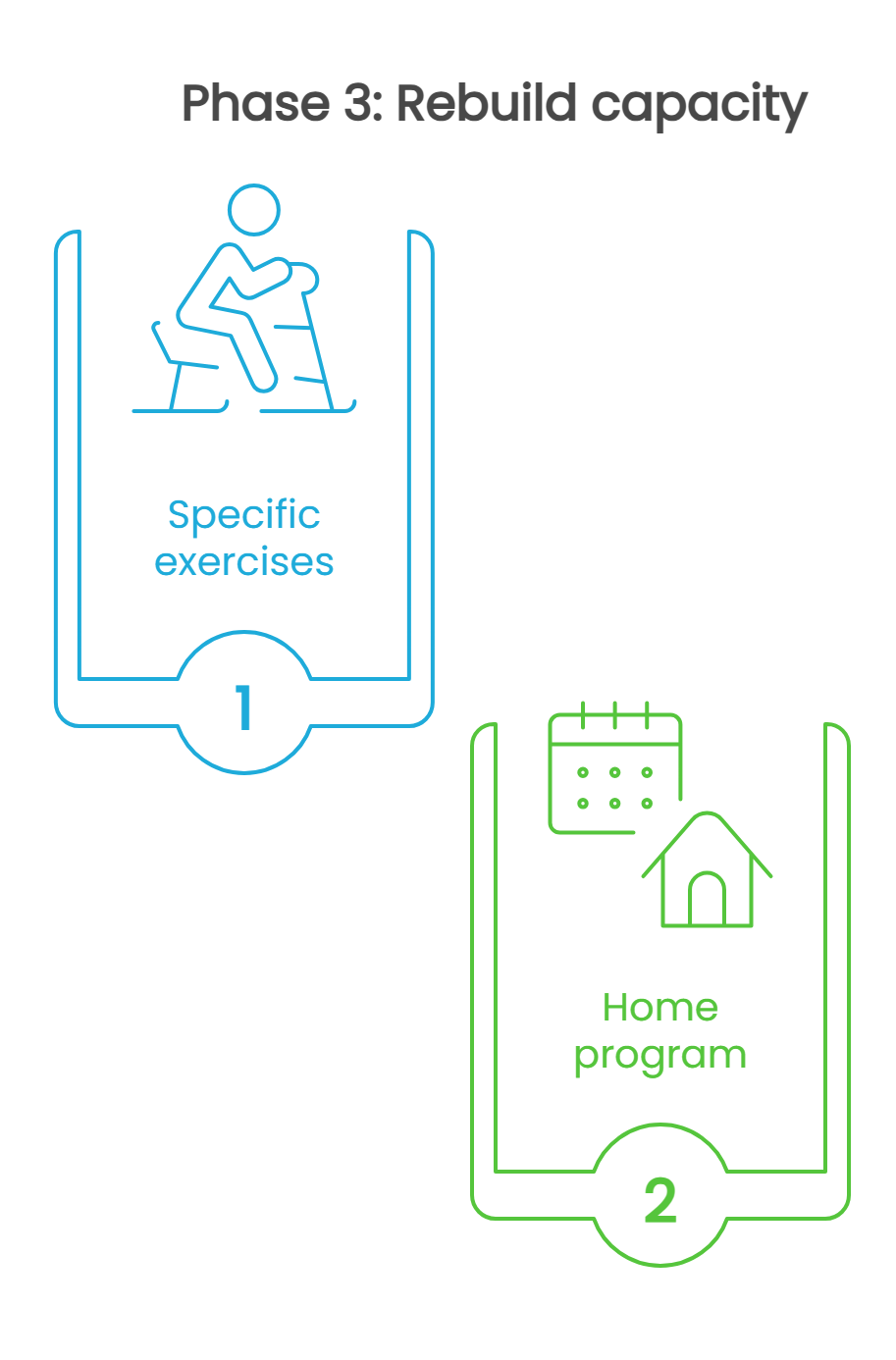
Lasting relief comes from strength and control, not just symptom relief. We progress you into specific exercises that rebuild the support around your spine and hips so the nerve is no longer under constant strain. You become an active participant here, with a manageable home program that fits your schedule.
Phase 4: Return to Activity and Life
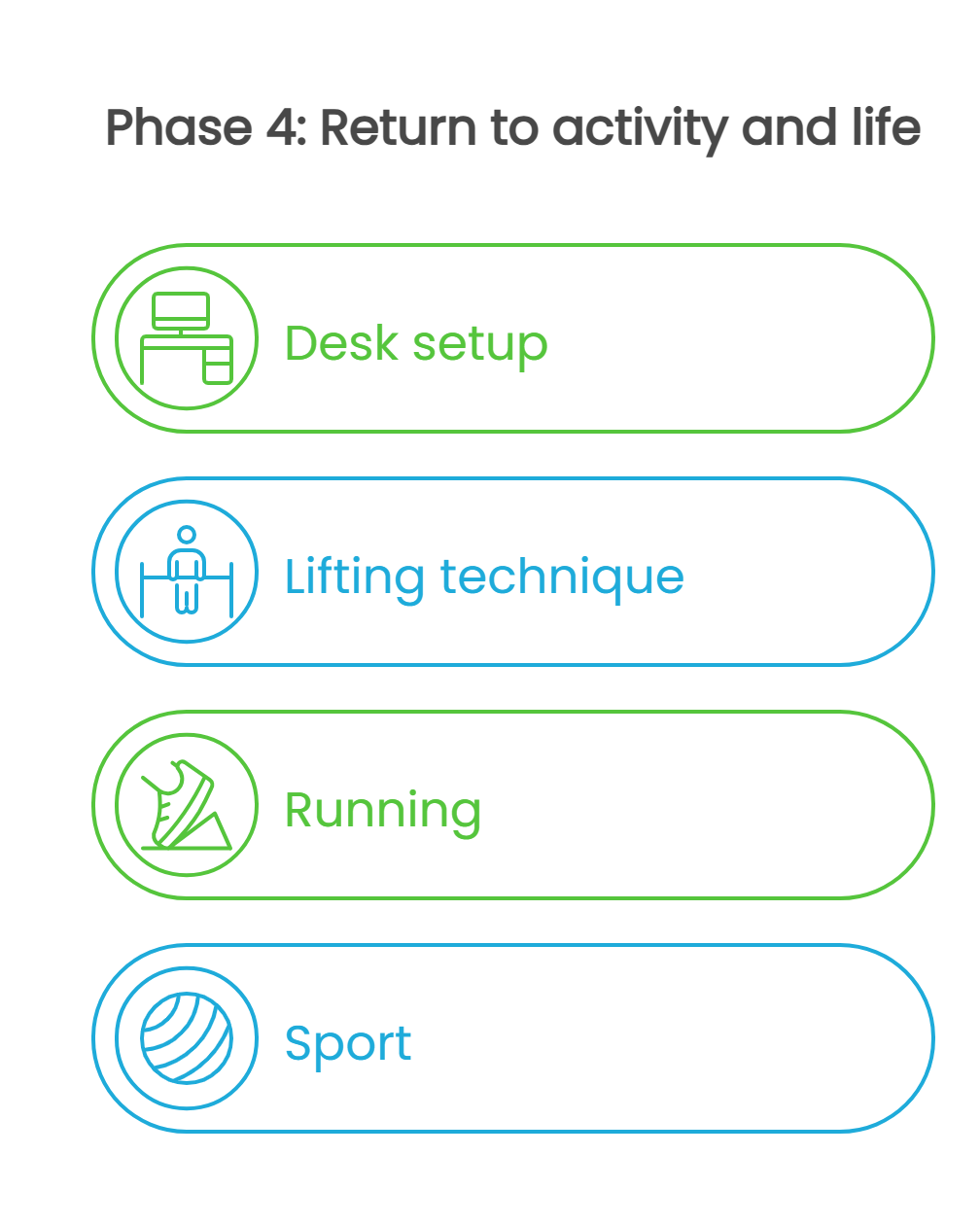
In the final phase we bridge back to your real-world demands, whether that is your desk setup, your lifting technique, your running, or your sport. We address the habits and loads that contributed in the first place, so progress holds.
Indication-based adjuncts. Depending on your presentation, your plan may include additional in-office tools such as spinal decompression or shockwave therapy. These are options we consider when the clinical picture supports them, not defaults for every case.
A clinical note worth stating plainly: not every modality is right for every case. Some of these adjunct technologies have stronger evidence than others, and the most reliable foundation for sciatica care remains active treatment built around movement and exercise. We recommend the tools we believe fit your specific situation, and we are happy to explain the reasoning behind each one.
Evidence Snapshot in Plain Language
We believe you deserve to know what the research actually supports. Here is an honest summary.
- National clinical guideline (NICE, low back pain and sciatica in over 16s). This guideline recommends keeping active and using exercise as the core of care, with manual therapy such as spinal manipulation, mobilization, or massage offered as part of a package that includes exercise. It applies broadly to adults with low back pain and sciatica. Its main limitation is that it is a general guideline, so it informs the overall approach rather than dictating any one person’s plan.
- National clinical guideline (American College of Physicians, noninvasive treatments for low back pain). For acute and subacute pain, this guideline supports non-drug options first, including heat, massage, and spinal manipulation, and for chronic pain it supports exercise and spinal manipulation among other active therapies. It applies to adults seeking non-surgical care. The key limitation is that it focuses on low back pain without nerve-root involvement, so it speaks to the broader picture more than to sciatica specifically.
- Systematic review of spinal manipulation or mobilization for radiculopathy. This review found moderate-quality evidence that spinal manipulation can help acute lumbar radiculopathy, which is the nerve-root irritation behind most sciatica. It applies most directly to recent-onset cases. The limitation is that evidence for long-standing, chronic cases was weaker.
- Network meta-analysis of non-surgical care for chronic sciatica (2025). Pooling fifty trials, this analysis identified spinal manipulative therapy and exercise combined with nerve mobilization among the options associated with short-term improvement in leg pain. It applies to adults whose sciatica has lasted three months or more. As with most of this literature, confidence in the findings varied and longer-term effects were less certain.
- What the natural history tells us. Across the research, most sciatica linked to a disc problem improves substantially within roughly six to eight weeks. This is genuinely good news, and it shapes our emphasis on supporting your recovery rather than overtreating it.
The common thread is consistent with how we practice: stay active, build movement and strength, and use hands-on care as part of a structured plan rather than as a standalone fix.
A Representative Recovery Story
Patient profile:
A 41-year-old Centreville office worker with about three weeks of right-sided buttock and leg pain that started after a weekend of yard work, with a desk job that kept them sitting most of the day.
Baseline limitations:
Difficulty sitting longer than 20 minutes, disrupted sleep, and pausing their usual gym routine. Pain rated 7 out of 10 at its worst, with tingling reaching the calf.
Assessment findings:
Exam pointed to a disc-related nerve-root irritation rather than a piriformis or hip source, with a positive straight leg raise and no red flags. Imaging was not needed at that stage.
Plan duration:
A phased plan over roughly eight weeks, starting at two visits per week and tapering as symptoms improved.
Interventions used:
Early hands-on care and soft tissue work to calm symptoms, progressing to mobility work and a home exercise program, with desk and lifting guidance to address the contributing load.

Milestones:
By week 2, easier sitting and better sleep. By week 4, the leg tingling had faded and pain dropped to a 2 or 3. By week 8 and beyond, a return to full workouts with a maintenance routine.
Outcome metrics:
Meaningful improvement in pain, daily function, and activity tolerance, along with renewed confidence to move without fear of a flare.
Maintenance plan:
A short ongoing home program plus periodic check-ins as needed, focused on keeping the gains and managing the sitting load that started it.
This example is for education only. Every patient’s outcome depends on their condition, health history, consistency, response to care, and whether additional medical evaluation is needed.
Dr. Brandon Czekaj
Chiropractor
Health & Rehab Chiropractic is led by Dr. Brandon Czekaj, Doctor of Chiropractic, owner and chiropractor at the Centreville office. He has a background in biology from Xavier University, earned his Doctor of Chiropractic degree from Life University, is a Certified Chiropractic Sports Practitioner®, and is certified in Kennedy Decompression Technique. His clinical background includes sports-related treatment, treating car accident injuries, rehab-focused planning, and a strong interest in helping patients reach their health goals, not just a temporary fix.
What is it like to work with this office? Thorough, practical, and personalized. Patients are not pushed through a generic sequence. The goal is to understand the problem, explain the plan clearly, track progress, and be honest about what makes sense. If this is the right fit, we will tell you. If it is not, we will tell you that too.

What Patients Are Saying


Is it Sciatica?
Free Sciatica Self-Care Guide
Relief often starts at home, and we want to make that easier. Download our free Sciatica Self-Care Guide for clear, practical steps you can use right now between visits.
Inside the guide you will find gentle movements and stretches to ease nerve irritation, simple posture and sitting adjustments for desk days, do’s and don’ts during a flare, and the red flags that mean it is time to call a provider. It is plain-language, printable, and built for real life.

Trusted Sciatica Care in Centreville
You do not have to keep rearranging your day around leg pain. Our team provides personalized, non-surgical sciatica care to patients in Centreville and the surrounding communities, including Chantilly, Manassas, and Fairfax.
Here is what a first visit looks like. We sit down and listen to your story, perform a thorough exam, explain what we find in plain language, and build a plan around your goals. If we are the right fit, we get started. If your situation calls for another kind of care, we will point you in the right direction.
When you are ready, we are here to help you move, work, and sleep more comfortably again.
References and Medical Review
- National Institute for Health and Care Excellence (NICE). Low back pain and sciatica in over 16s: assessment and management. Guideline NG59 (2016, updated 2020). nice.org.uk/guidance/ng59
- Qaseem A, et al., for the American College of Physicians. Noninvasive Treatments for Acute, Subacute, and Chronic Low Back Pain: A Clinical Practice Guideline. Annals of Internal Medicine (2017).
- Spinal manipulation or mobilization for radiculopathy: a systematic review. Physical Medicine and Rehabilitation literature (2011), PubMed ID 21292148.
- Effectiveness of non-surgical interventions for patients with chronic sciatica: a systematic review with network meta-analysis (2025).
Medical review: Reviewed by Dr. Brandon Czekaj, DC, Certified Chiropractic Sports Physician.
Last reviewed: June 2026.
Sciatica FAQs
For most people, sciatica improves substantially within about six to eight weeks, especially with early, active care. Some cases settle faster and others take longer, particularly when an underlying driver has not been addressed.
Yes, for many people chiropractic care is a reasonable non-surgical option. Research supports hands-on care like spinal manipulation when it is combined with exercise and movement, which is the approach we use. Your plan is tailored to what your exam shows.
Both can cause buttock and leg pain, but the source differs. True sciatica usually comes from irritation of a nerve root in the lower spine, often disc-related, while piriformis syndrome involves the sciatic nerve being irritated by a tight muscle in the buttock. Telling them apart is part of our assessment, because it changes the plan.
Gentle activity generally beats prolonged bed rest. Resting too much can stiffen things up and slow recovery. We help you find the right amount of movement for your stage so you stay active without overdoing it.
The most helpful stretches and movements depend on your specific case, since the wrong ones can sometimes aggravate symptoms. Our self-care guide includes gentle starting points, and we tailor your home program to what your body responds to.
Persistent sciatica often points to an ongoing contributor, such as long hours of sitting, continued strain, weakness, or an underlying issue like a disc problem. A thorough reassessment helps us find what is keeping it around.
Usually not in the early weeks. For most people, imaging does not change the plan and is not routinely recommended at first. We order it when red flags are present, when you are not improving as expected, or when a referral is being considered.
For most people, non-surgical care like this is a safe option, and we screen carefully for the small number of cases that need a different path. If your situation calls for medical or surgical evaluation, we will tell you and help you get there.