Back Pain Treatment in Centreville, VA
Back Pain Treatment in Centreville, VA
Table of Contents
- Quick Answer
- Back Pain Explained: What Is Happening in the Spine?
- What Back Pain Can Feel Like Day to Day
- Why Back Pain Happens: Common Drivers and Contributing Factors
- Back Pain Red Flags: When to Seek Urgent Care
- How We Assess Back Pain at Health & Rehab Chiropractic
- Your Personalized Back Pain Treatment Plan
- Evidence Snapshot: What Research Suggests About Back Pain Care
- Example Patient Journey: Back Pain Recovery Without Hype
- Doctor Bio
- Reviews
- Download: Back Pain Self-Care Guide
- Back Pain Care in Centreville, VA
- References and Medical Review
- Back Pain Treatment FAQs
Quick Answer: Back Pain Treatment in Centreville, VA
Back pain is discomfort, stiffness, aching, or sharp pain that affects the lower back, mid back, or surrounding muscles, joints, discs, and nerves. Many cases of lower back pain are related to mechanical strain, irritated spinal joints, muscle spasms, disc irritation, sciatica, posture, repetitive stress, or a mismatch between activity load and recovery. First-line care usually includes staying active as tolerated, education, guided exercise, hands-on care when appropriate, and a plan to rebuild strength and movement. Urgent medical care is needed if back pain follows major trauma or comes with fever, unexplained weight loss, progressive leg weakness, numbness in the saddle area, or new bowel or bladder changes. (AAFP)
Back Pain Explained: What Is Happening in the Spine?
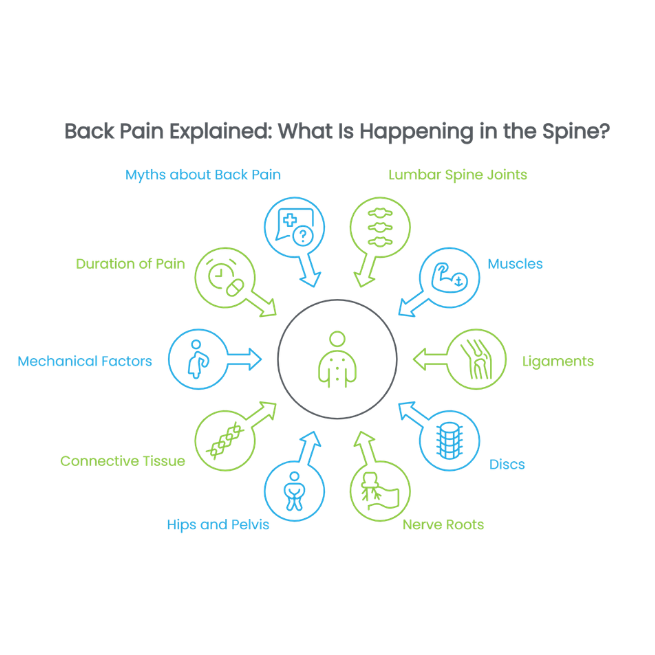
Back pain is not one single condition. It is a symptom that can come from several structures in and around the spine, including the lumbar spine joints, muscles, ligaments, discs, nerve roots, hips, pelvis, and surrounding connective tissue.
For many patients, back pain is mechanical. That means the pain changes with position, movement, posture, sitting, walking, lifting, bending, or activity. A patient may feel worse after sitting at a desk, lifting something awkwardly, sleeping in a poor position, driving for a long time, or returning to exercise too quickly.
Back pain may also involve the discs between the bones of the spine. A bulging disc or herniated disc can irritate nearby nerves and sometimes cause pain that travels into the buttock, hip, thigh, calf, or foot. When pain travels down the leg because of sciatic nerve irritation or nerve root involvement, patients may describe it as sciatica, radiating pain, burning, tingling, numbness, or “back pain shooting down the leg.”
Back pain is often described by how long it has been present. Acute back pain lasts less than 4 weeks. Subacute back pain lasts 4 to 12 weeks. Chronic or persistent back pain lasts longer than 12 weeks. These timelines help guide care, but they do not tell the whole story. A person with new pain may need reassurance and short-term symptom relief. A person with persistent pain may need a broader plan that includes mobility, strength, habit changes, and confidence with daily movement. (AAFP)
One common myth is that every case of back pain means something is “out of place.” In reality, pain often reflects irritation, sensitivity, load intolerance, muscle guarding, or reduced movement capacity. Another common myth is that rest is always best. Short periods of relative rest can help after a flare-up, but long bed rest is generally not recommended. Most back pain plans should help patients keep moving safely, not make them afraid to move. (AAFP)

What Back Pain Can Feel Like Day to Day
Back pain can show up in different ways depending on the person, the cause, and how sensitive the area has become. Some patients feel a dull ache across the lower back. Others feel sharp lower back pain with bending, twisting, coughing, or standing up from sitting in a chair. Some notice stiffness first thing in the morning. Others feel worse after a long workday, a commute, or time on their feet.
Common back pain symptoms may include:
- Dull, aching, or tight lower back pain
- Sharp pain with bending, lifting, twisting, or standing up
- Muscle spasms or guarding
- Stiffness after sitting, sleeping, or inactivity
- Pain that improves with gentle walking or movement
- Pain that worsens with prolonged sitting or standing
- Pain into the buttock, hip, thigh, calf, or foot
- Tingling, numbness, burning, or weakness when a nerve is irritated
- Reduced range of motion in the spine or hips
- Difficulty sleeping, exercising, working, driving, or lifting
For some people, back pain is mainly an inconvenience. For others, it affects work, sleep, parenting, chores, exercise, and confidence. A desk worker may notice back pain when sitting. A commuter may feel worse after driving. A parent may struggle with lifting a child. An athlete may avoid training because they are afraid of making the pain worse. A person with chronic back pain may start moving less, which can reduce strength and make future flare-ups more likely.
The goal of treatment is not only to reduce pain. It is also to understand what is driving the pain, restore motion, rebuild capacity, and help patients return to the daily activities that matter most.

Why Back Pain Happens: Common Drivers and Contributing Factors
Back pain often happens when the spine, muscles, discs, nerves, and surrounding tissues are asked to handle more stress than they are currently prepared for. This can happen suddenly after a lift, twist, fall, workout, or car accident. It can also build gradually from repeated postures, long sitting, poor recovery, stress, reduced strength, or repetitive work demands.
Common contributors include:
- Muscle strain or ligament irritation
- Lumbar joint stiffness or irritation
- Disc irritation, bulging disc, or herniated disc
- Sciatic nerve or nerve root irritation
- Poor tolerance to prolonged sitting or standing
- Repetitive bending, lifting, or twisting
- Weakness or reduced endurance in the core, hips, and glutes
- Limited hip mobility or reduced spinal mobility
- Low activity levels followed by sudden spikes in activity
- Sleep disruption, stress, and poor recovery
- Prior injuries, car accidents, sports injuries, or work-related strain
- Fear of movement after a painful flare-up
Back pain is rarely just about one structure. A patient may have disc irritation, but their symptoms may also be affected by muscle guarding, hip mobility, sitting tolerance, stress, and reduced activity. Another patient may have lower back pain that is mostly mechanical, but the pattern may be driven by weak hip control, repetitive work movements, and not enough recovery.
This is why a one-size-fits-all approach often falls short. A stronger plan looks at the patient’s symptoms, movement patterns, daily demands, pain triggers, health history, goals, and response to care.

Back Pain Red Flags: When to Seek Urgent Care
Most back pain is not a medical emergency, but some symptoms need urgent evaluation. Seek urgent medical care or emergency care if your back pain is associated with any of the following:
- New loss of bladder or bowel control
- Difficulty starting urination or new urinary retention
- Numbness in the groin, inner thighs, or saddle area
- Major or progressive leg weakness
- Loss of coordination, foot drop, or worsening walking ability
- Fever, chills, or feeling very unwell with back pain
- Unexplained weight loss
- History of cancer with new or worsening back pain
- Significant trauma, such as a fall, car accident, or direct injury
- Back pain after minor trauma if you have osteoporosis or long-term steroid use
- Severe pain that is constant, worsening, or not relieved by rest
- Suspected spinal infection or recent spinal procedure with worsening pain
These symptoms can be associated with more serious conditions, including fracture, infection, cancer, or cauda equina syndrome. If any of these are present, do not wait for chiropractic care to “see if it settles.” Get medical evaluation promptly. (AAFP)
If your symptoms are not an emergency but are worsening, spreading into the leg, causing numbness or weakness, or not improving with conservative care, it is still worth being evaluated. The right provider should be able to assess your case, explain what may be happening, and refer for imaging or medical care when needed.

How We Assess Back Pain at Health & Rehab Chiropractic
A good back pain treatment plan starts with a clear assessment. At Health & Rehab Chiropractic in Centreville, VA, the first step is understanding your symptoms, your health history, your daily routine, and what you want to get back to.
Your visit may include a detailed conversation about when the pain started, where you feel it, what makes it better or worse, whether symptoms travel into the leg, and how pain affects your work, sleep, exercise, and daily life. Your chiropractor may also ask about prior injuries, car accidents, sports activity, work demands, medications, previous imaging, and any red flag symptoms.
The physical exam may include:
- Posture and movement assessment
- Lumbar spine range of motion
- Hip and pelvic mobility screening
- Muscle strength testing
- Reflex and sensation checks when nerve symptoms are present
- Orthopedic and neurologic tests when appropriate
- Functional movement testing, such as bending, squatting, walking, or transitional movements
- Palpation of muscles, joints, and areas of tenderness
- Assessment of activity limitations and treatment goals
The goal is to determine whether your pain appears mechanical, disc-related, nerve-related, muscular, joint-driven, or potentially outside the scope of conservative chiropractic care. This is also where differential diagnosis matters. Not every case of lower back pain needs the same treatment, and not every case is appropriate for spinal manipulation or decompression.
Imaging is not automatically needed for every case of back pain. Guidelines generally recommend avoiding routine imaging for uncomplicated low back pain unless red flags are present, there is a neuromuscular deficit, or symptoms are not improving with appropriate conservative care. Imaging may be helpful when the result is likely to change the plan, such as suspected fracture, infection, cancer, progressive neurologic findings, or persistent symptoms that are not responding as expected. (NICE)

Your Personalized Back Pain Treatment Plan
Back pain treatment should be structured, but it should not be rigid. Your care plan may change based on your symptoms, exam findings, tolerance, progress, and goals. At Health & Rehab Chiropractic, treatment may include chiropractic adjustments, rehab therapy, exercise programs, soft tissue techniques, spinal decompression, shockwave therapy, or other therapeutic modalities when clinically appropriate.
Phase 1: Calm Irritation
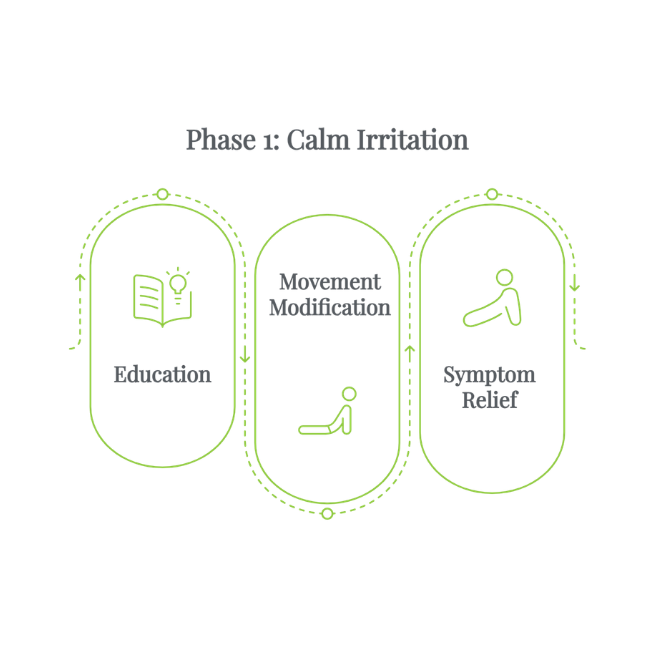
The first goal is to reduce irritation and help you move with less fear and less guarding. This phase may include education, gentle movement, activity modification, symptom-relieving positions, hands-on care, and strategies to help you avoid repeated flare-ups.
For some patients, this may mean modifying sitting, lifting, sleeping, or workout habits for a short time. For others, it may mean reducing muscle spasm, improving joint motion, or decreasing sensitivity around an irritated nerve.
The goal is not to keep you dependent on passive care. The goal is to calm the painful area enough that you can begin moving better and rebuilding capacity.
Phase 2: Restore Motion
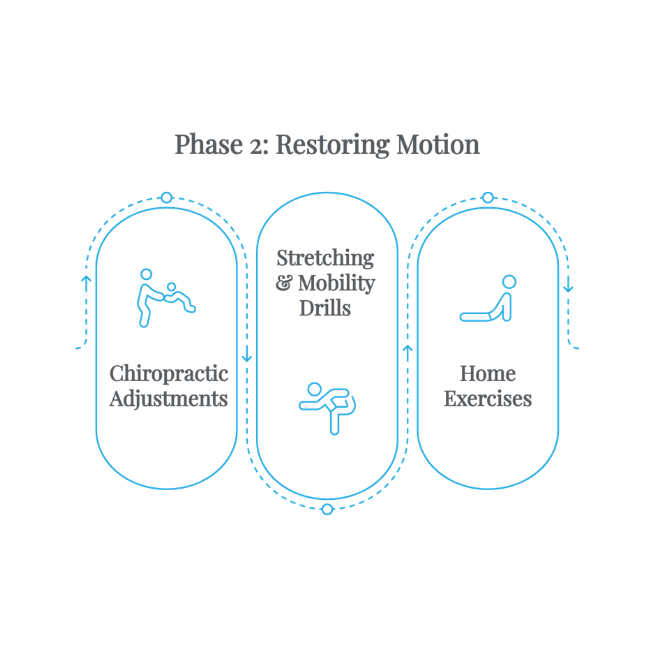
Once symptoms are less reactive, the next step is improving movement in the spine, hips, pelvis, and surrounding muscles. Depending on your case, this may include chiropractic adjustments, spinal mobilization, soft tissue work, stretching, guided mobility drills, and specific home exercises.
Patients with back pain often move around the painful area without realizing it. They may avoid bending, shift weight away from one side, tighten the back muscles, or reduce hip motion. Over time, these patterns can keep the area sensitive.
Restoring motion helps reduce stiffness and gives the body more options for movement.
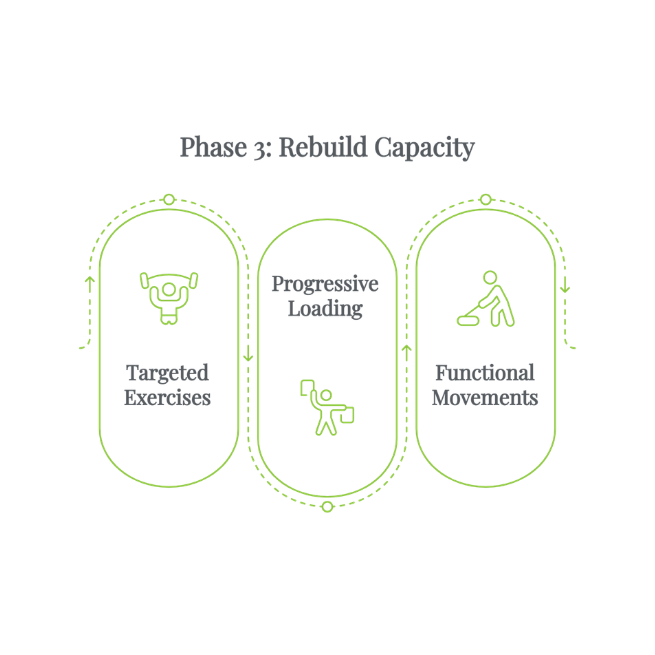
Phase 3: Rebuild Capacity
Pain relief is important, but lasting improvement usually requires more than feeling better for a few days. This phase focuses on building strength, endurance, and confidence.
Your plan may include core strengthening, hip and glute exercises, progressive loading, posture and lifting mechanics, balance work, and functional movements that relate to your daily life. A desk worker may need sitting tolerance and hip mobility. A parent may need lifting mechanics. An athlete may need return-to-training progressions. A patient with chronic back pain may need graded exposure to movements they have avoided.
This phase helps your back tolerate more of what life asks from it.
Phase 4: Return to Activity and Life
The final phase focuses on returning to normal routines with less fear of relapse. This may include a home exercise plan, work or sport-specific guidance, maintenance visits when appropriate, and strategies for handling future flare-ups early.
For some patients, success means sleeping through the night. For others, it means walking without sharp pain, sitting through a workday, playing with their kids, returning to the gym, hiking, golfing, or working without constant lower back pain.
The goal is to help you understand your back, not feel trapped by it.

Adjunct Technologies: Used When Clinically Appropriate
Shockwave Therapy
Shockwave therapy may be considered for certain chronic soft tissue or musculoskeletal pain patterns when the exam suggests it may support the treatment plan. It should not replace movement, strength, or clinical reasoning. Research suggests shockwave may provide short-term improvements in pain and disability for some chronic low back pain patients, but evidence is still developing and patient selection matters. (PubMed)
Spinal Decompression
Spinal decompression may be considered for select disc-related or nerve-related presentations, such as symptoms associated with disc irritation or sciatica. However, decompression is not right for every back pain case, and traction-based approaches have mixed evidence. It should be used only when the assessment supports it and as part of a broader care plan that includes education and active rehabilitation.
Clinical Note
Not every modality is right for every case. The best back pain treatment plan depends on your diagnosis, symptom behavior, exam findings, health history, goals, and how your body responds over time.
Evidence Snapshot: What Research Suggests About Back Pain Care
Clinical practice guideline: American College of Physicians
For acute and subacute low back pain, the guideline emphasizes that many cases improve over time and that patients should remain as active as pain allows. It supports noninvasive options such as superficial heat, massage, acupuncture, and spinal manipulation as initial treatment options, with chronic care placing more emphasis on exercise and other nonpharmacologic approaches. This applies mainly to adults with non-specific low back pain. The limitation is that many treatments show modest average effects, so care should be individualized. (AAFP)
Guideline: NICE low back pain and sciatica recommendations
NICE recommends advice, self-management, encouragement to continue normal activities, and exercise for low back pain with or without sciatica. It also recommends manual therapy, including spinal manipulation, mobilization, or soft tissue techniques, only as part of a treatment package that includes exercise, with or without psychological support. This applies to adults and teens over 16. The limitation is that guideline recommendations do not replace individual assessment. (NICE)
Imaging guidance: Low back pain guidelines
Routine imaging is generally not recommended for uncomplicated back pain. Imaging may be appropriate when red flags are present, neurologic deficits are found, symptoms persist despite conservative care, or imaging results are likely to change management. This applies to patients without signs of serious pathology. The limitation is that some patients do need imaging, especially when the history or exam suggests a more serious condition. (NICE)
Primary care review: Chronic low back pain evaluation and management
Chronic low back pain should be evaluated with a history and physical exam that screens for red flags, nerve symptoms, functional limitations, and factors that may increase disability risk. Nonpharmacologic care is generally considered first-line, and most patients with chronic low back pain do not require surgery. This applies to adults with pain lasting 12 weeks or more. The limitation is that chronic pain is complex and may require coordination with other health professionals. (AAFP)
Technology and adjunct therapies
Shockwave, and decompression-type therapies may help select patients, but the evidence varies by modality, diagnosis, study quality, and treatment protocol. These options should be considered adjuncts, not universal solutions. This applies to carefully selected cases where the exam supports the modality. The limitation is that results are not guaranteed and should be measured with pain, function, activity tolerance, and patient goals. (Cochrane)
Example Patient Journey: Back Pain Recovery Without Hype
Patient profile:
A 42-year-old office worker in Centreville with recurring lower back pain and occasional pain into the right buttock after long periods of sitting.
Baseline limitations:
The patient reported pain when sitting longer than 30 minutes, stiffness when standing from a chair, difficulty sleeping through the night, and fear of returning to strength training.
Assessment findings:
The exam found reduced lumbar and hip mobility, tenderness through the lower back muscles, guarded bending, reduced core endurance, and mild nerve tension signs without progressive weakness or red flag symptoms.
Plan duration:
8 weeks, with reassessment throughout care.
Interventions used:
Education, activity modification, chiropractic care, soft tissue work, mobility exercises, progressive core and hip strengthening, sitting tolerance strategies, and a home exercise plan.

Milestones:
By week 2, the patient reported less morning stiffness and improved confidence with walking.
By week 4, sitting tolerance improved from 30 minutes to about 60 minutes, with fewer flare-ups after work.
By week 8 and beyond, the patient returned to modified strength training, reported improved bending confidence, and had a clear plan for managing early warning signs.
Outcome metrics:
Pain intensity decreased, sitting tolerance improved, sleep was less disrupted, and the patient felt more confident returning to exercise.
Maintenance plan:
The patient continued a home plan focused on hip mobility, core endurance, lifting mechanics, and periodic check-ins based on activity demands.
This example is for education only. Every patient’s outcome depends on their condition, health history, consistency, response to care, and whether additional medical evaluation is needed.
Dr. Brandon Czekaj
Chiropractor
Health & Rehab Chiropractic is led by Dr. Brandon Czekaj, Doctor of Chiropractic, owner and chiropractor at the Centreville office. He has a background in biology from Xavier University, earned his Doctor of Chiropractic degree from Life University, is a Certified Chiropractic Sports Practitioner®, and is certified in Kennedy Decompression Technique. His clinical background includes sports-related treatment, treating car accident injuries, rehab-focused planning, and a strong interest in helping patients reach their health goals, not just a temporary fix.
What is it like to work with this office? Thorough, practical, and personalized. Patients are not pushed through a generic sequence. The goal is to understand the problem, explain the plan clearly, track progress, and be honest about what makes sense. If this is the right fit, we will tell you. If it is not, we will tell you that too.

What Patients Are Saying


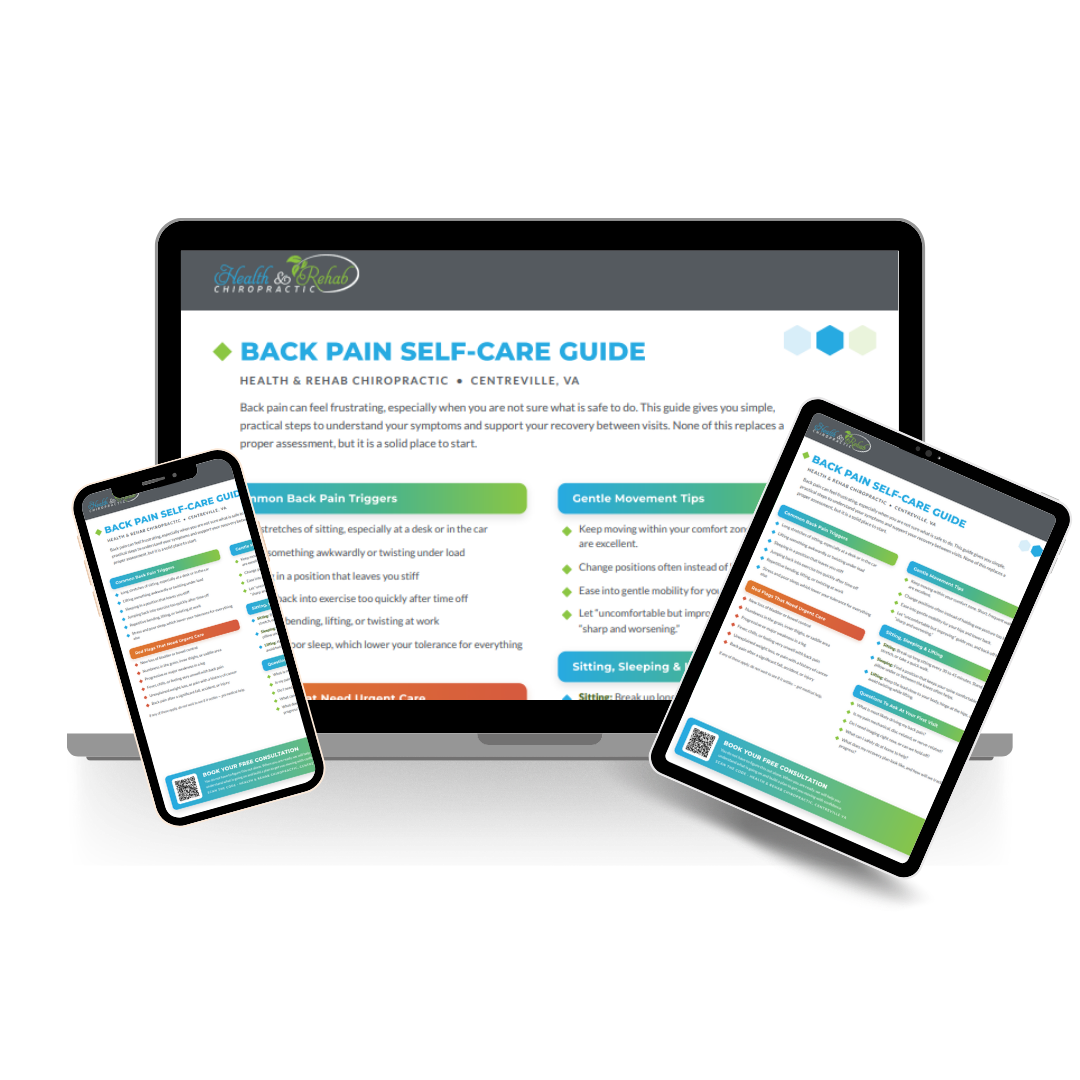
Free Back Pain Guide: What’s Safe and When to Worry
Back pain can feel frustrating, especially when you are not sure what is safe to do. Download our printable guide for simple, practical steps you can use to better understand your symptoms and support your recovery between visits.
Inside the guide:
- Common back pain triggers
- Red flags that need urgent care
- Gentle movement tips
- Sitting, sleeping, and lifting reminders
- Questions to ask during your first visit
Local Back Pain Care in Centreville, VA
If you are looking for back pain treatment in Centreville, VA, Health & Rehab Chiropractic offers conservative, non-surgical care focused on assessment, clear goals, and personalized treatment. The goal is to understand what is causing your symptoms, determine whether chiropractic care is appropriate, and build a plan that helps you move better with more confidence.
Your first visit is designed to give you clarity. The team will review your symptoms, discuss your health history, perform an exam, screen for signs that may require referral, and explain your options. If chiropractic care is a good fit, your plan may include adjustments, rehab therapy, exercise guidance, soft tissue work, spinal decompression, shockwave therapy, or other supportive care based on your needs. If your case needs medical imaging, specialist evaluation, or another type of care, the team will help point you in the right direction.
References and Medical Review
References
American College of Physicians guideline summary, published by American Family Physician: Noninvasive Treatments for Acute, Subacute, and Chronic Low Back Pain. (AAFP)
NICE Guideline NG59: Low Back Pain and Sciatica in Over 16s, Assessment and Management. (NICE)
American Family Physician: Chronic Low Back Pain in Adults, Evaluation and Management. (AAFP)
American Family Physician: Diagnosis and Treatment of Acute Low Back Pain. (AAFP)
World Health Organization: Guideline for Non-Surgical Management of Chronic Primary Low Back Pain in Adults. (World Health Organization)
Cochrane: Low-Level Laser Therapy for Low-Back Pain. (Cochrane)
Macario A, Pergolizzi J. Systematic Literature Review of Spinal Decompression via Motorized Traction for Chronic Discogenic Low Back Pain.
Yue L, et al. Extracorporeal Shockwave Therapy for Treating Chronic Low Back Pain, systematic review and meta-analysis. (PubMed)
Frequently Asked Questions
The best treatment depends on what is driving the pain. Many cases respond well to conservative care that includes education, staying active as tolerated, hands-on treatment when appropriate, mobility work, strengthening, and activity modification. If pain is related to sciatica, disc irritation, trauma, or neurologic symptoms, the treatment plan may need to be more specific.
You should consider an evaluation if your back pain is intense, keeps coming back, affects sleep or work, travels into the leg, causes numbness or tingling, or does not improve with basic self-care. You should seek urgent medical care if you have red flag symptoms such as new bowel or bladder changes, saddle numbness, fever, unexplained weight loss, major trauma, or progressive leg weakness.
Chiropractic care may help some patients with back pain, especially when it is part of a broader plan that includes education, movement, exercise, and functional goals. Spinal manipulation, mobilization, soft tissue techniques, and rehab exercises may be used depending on the patient’s exam findings and tolerance.
Not always. Many cases of back pain do not require imaging right away. Imaging may be recommended if red flags are present, there is progressive neurologic weakness, symptoms do not improve with appropriate conservative care, or the imaging result would change the treatment plan.
Back pain that travels into the buttock, thigh, calf, or foot may involve irritation of a nerve root or the sciatic nerve. This is often called sciatica. Symptoms may include sharp pain, burning, tingling, numbness, or weakness. A proper assessment helps determine whether the symptoms are likely nerve-related and whether conservative care is appropriate.
Sitting is not “bad,” but prolonged sitting can aggravate lower back pain for some people, especially if the back is sensitive, stiff, or irritated. Changing positions, taking walking breaks, improving hip mobility, and building trunk endurance may help improve sitting tolerance.
Some acute back pain improves over time, especially when there are no red flags or neurologic deficits. However, recurring, worsening, or persistent back pain should be evaluated so you can understand what is contributing to it and what steps may help reduce future flare-ups.
Avoid pushing through severe or worsening pain, heavy lifting that clearly aggravates symptoms, long bed rest, and ignoring red flags. It is usually better to stay gently active within tolerance and get guidance on which movements are safe for your case.
Spinal decompression may be considered for select patients, especially when symptoms suggest disc-related or nerve-related involvement. It is not right for every back pain case and should not be treated as a cure-all. A chiropractor should assess your symptoms, exam findings, and health history before recommending it.
It depends on the cause, severity, duration, and your goals. Some patients improve in a few visits. Others with chronic back pain, disc irritation, sciatica, or long-term movement limitations may need a more structured plan over several weeks. Progress should be measured by pain, movement, function, sleep, activity tolerance, and confidence.