Chiropractor in Centreville, VA
| NPI: 1235461062 | Virginia Chiropractic License Number: 0104556840 | Last reviewed: August 7, 2026
Chiropractor in Centreville, VA: Evidence-Based Treatment to Help You Move Better With Less Pain
Table of Contents
- Need a Chiropractor Near Me? Here’s the Quick Answer
- What a Chiropractor Does and What It Does Not Mean
- What a Chiropractor in Centreville Can Help You Do
- Who This Service Is Best For
- Conditions and Body Areas We Commonly Treat
- How We Assess Before We Treat
- What to Expect From Your First Visit and Follow-Ups
- Our 4-Phase Treatment Framework
- Your Treatment Toolbox
- Evidence and Integrity Matter Here
- De-Identified Case Example
- Meet The Doctor
- What Patients are Saying
- Insurance, Referral, and Visit Details
- Download Our Free Patient Guide
- Watch Our Video: Why Chiropractic Care Might be a Good Fit
- Book a Chiropractor in Centreville, VA
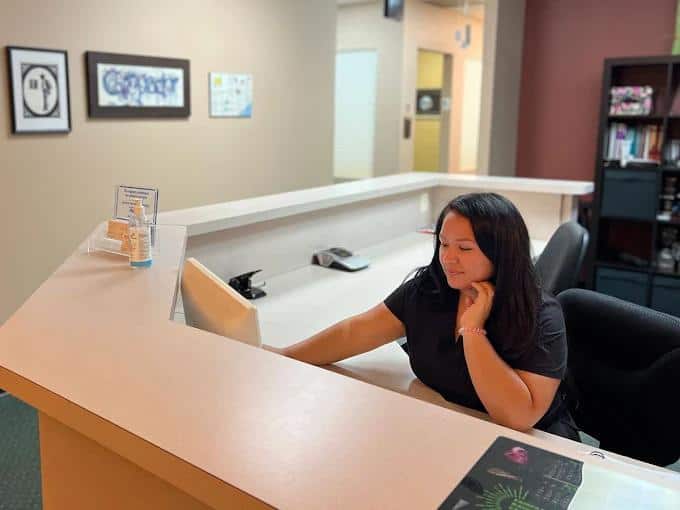
Need a Chiropractor Near Me? Here’s the Quick Answer
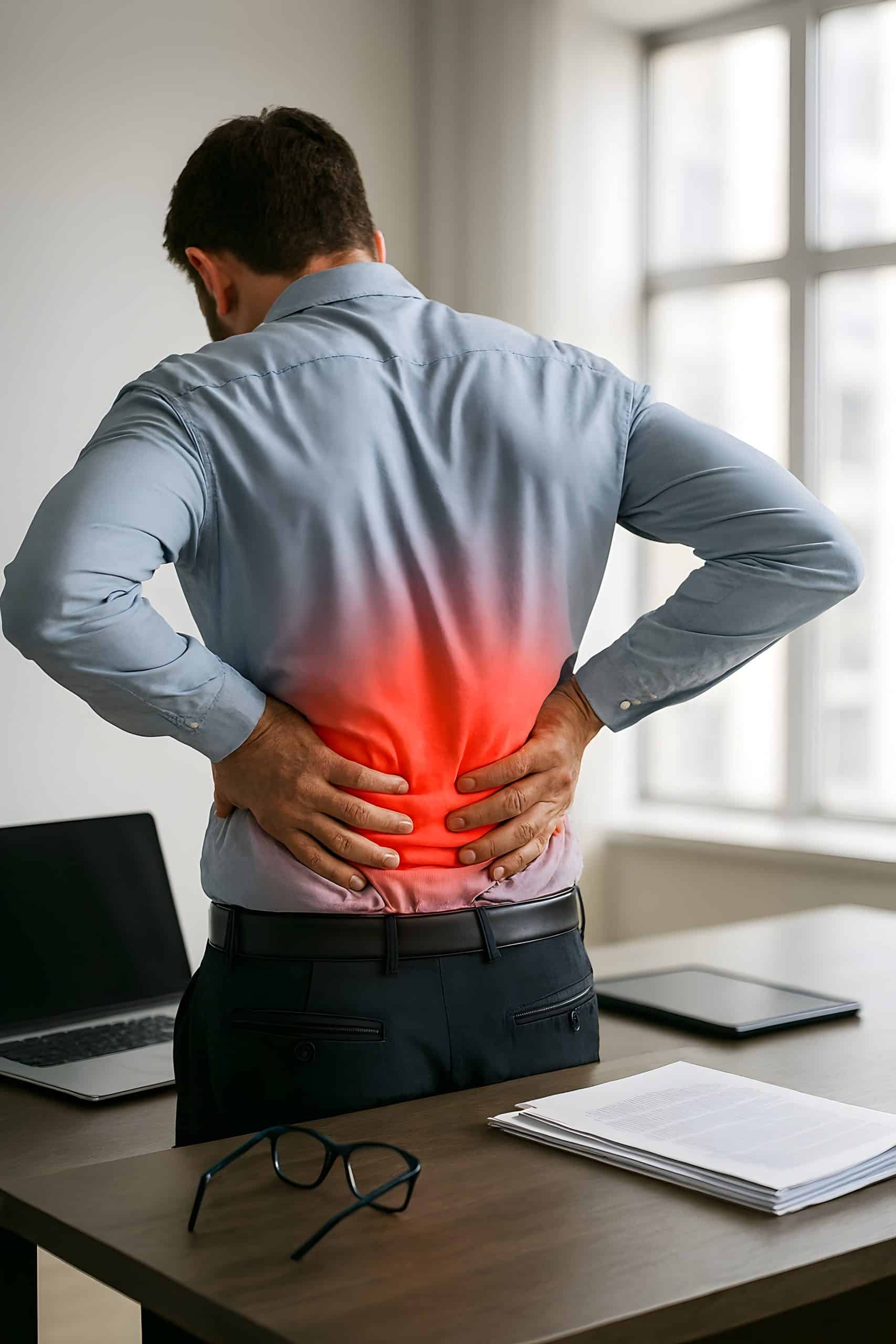
A chiropractor evaluates how your spine, joints, muscles, and nerves are functioning, then builds a treatment plan to help reduce pain, improve mobility, and get you back to daily life with more confidence. At Health & Rehab in Centreville, this may help if you are dealing with lower back pain, neck pain, sciatica, headaches, whiplash, muscle tension, sports injuries, or pain after an auto accident. What makes our office different is simple: we start by figuring out whether you are a good fit, and if you are not, we will refer you to the right person. Seek urgent medical attention right away for major trauma, fever, unexplained weight loss, new bowel or bladder changes, saddle numbness, or rapidly worsening arm or leg weakness. (NICE)
What a Chiropractor Does and What It Does Not Mean
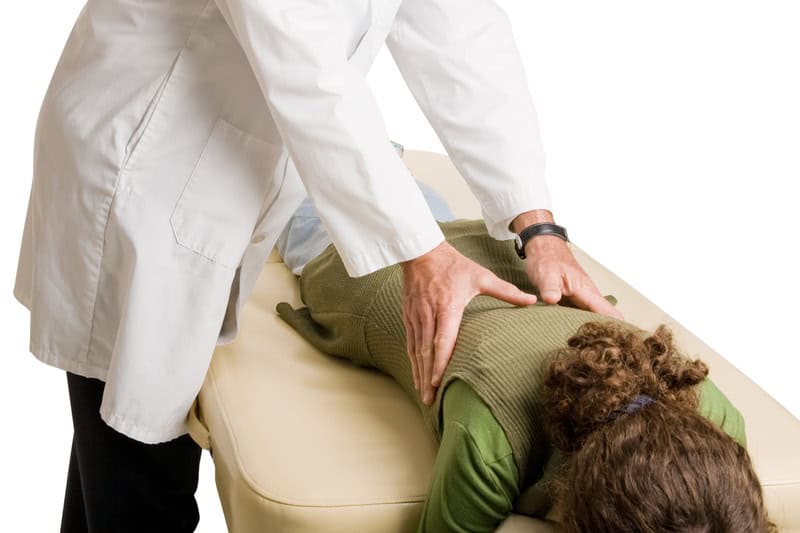
Working with a chiropractor means getting a focused musculoskeletal assessment and a treatment plan built around your symptoms, movement limits, and goals. In plain English, we look at what is not moving well, what is being overloaded, and what needs to change so your body can calm down and move better again. Treatment may include spinal adjustment, joint mobilization, soft tissue therapy, corrective exercises, rehab exercises, activity guidance, and selected in-office modalities when they fit the problem in front of us. For common spine-related problems, the strongest conservative approach usually combines education, exercise, and hands-on treatment rather than relying on one thing alone. (NICE)
It is also important to clear up two common misconceptions. First, seeing a chiropractor is not just about getting your back “cracked.” A good visit should include an exam, a diagnosis, measurable goals, and a plan. Second, this is not a substitute for urgent or specialist medical treatment when red flags are present. If your symptoms suggest fracture, infection, cancer, progressive neurologic loss, or another serious condition, the right move is referral, not guesswork. (AAFP)

What a Chiropractor in Centreville Can Help You Do
- Reduce pain and calm flare-ups: This may include lower back pain, neck pain, muscle tension, nerve irritation, or post-injury pain that is making normal life harder than it needs to be.
- Improve mobility and flexibility: When the cervical spine, thoracic spine, lumbar spine, sacroiliac joint, or surrounding soft tissue is stiff, movement often becomes guarded and uncomfortable.
- Build strength and capacity: Pain relief matters, but so does rebuilding tolerance for sitting, walking, lifting, training, parenting, commuting, and working.
- Recover from injury: We commonly work with sports injuries, auto accident injuries, whiplash, repetitive strain, and work-related problems.
- Return to sport or work: The goal is not just feeling better on the table. The goal is to function better in real life.
Prevent recurrence: Posture, pacing, movement strategy, and home exercises all matter if you want results that actually hold up.
Who This Service Is Best For
You may be a good fit if:
- You have lower back pain that flares with sitting, bending, lifting, or getting out of bed
- You have neck pain, stiffness, or muscle tension that keeps coming back
- You are dealing with sciatica, a pinched nerve, numbness, or tingling that seems mechanical in nature
- You have headaches or migraines that seem connected to neck tension, posture, or movement
- You were in a car accident and now have whiplash, back pain, or reduced range of motion
- You picked up a sports injury and want a structured rehab plan, not just temporary symptom relief
- You are active but feel limited by shoulder, hip, knee, foot, ankle, wrist, or hand pain
- You have chronic pain and want a more measured, step-by-step plan
- You want a non-surgical first step before jumping into imaging or invasive procedures
- You want someone to tell you honestly whether this is the right fit, instead of trying to make every problem fit the same template
Not sure? That is exactly what the assessment is for. If you have been searching for a chiropractor near me, a back pain chiropractor near me, or a neck pain chiropractor near me, the next step is not guessing. It is getting examined properly.
Conditions and Body Areas We Commonly Treat
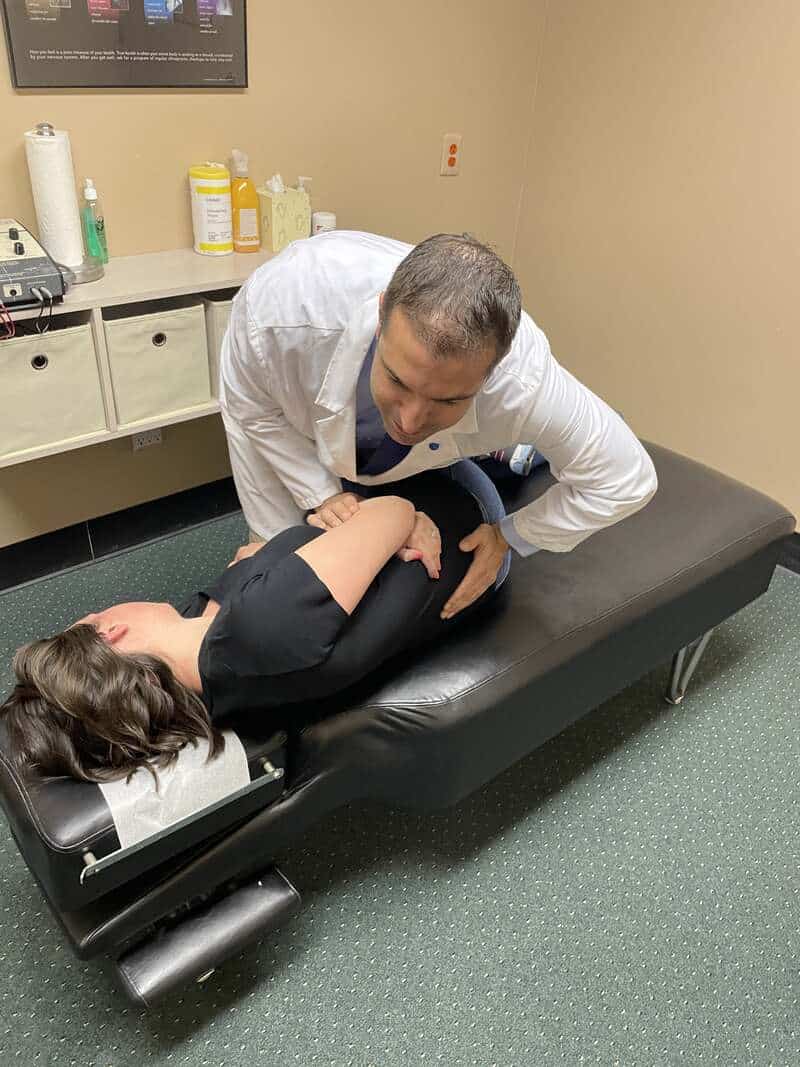
We commonly work with spine, joint, muscle, and nerve-related problems that affect everyday movement. That includes the cervical spine when neck pain, stiffness, headaches, or arm symptoms are present, and the thoracic spine when upper back tension and posture-related strain start to build. It also includes the lumbar spine, spinal discs, and sacroiliac joint when lower back pain, sciatica, bulging disc symptoms, herniated disc irritation, or nerve compression are part of the picture.
If you have been looking for a chiropractor for lower back pain, a sciatica chiropractor near me, or a chiropractor for herniated disc, that usually means pain is starting to affect sitting, walking, sleep, exercise, or work. We also see patients searching for a chiropractor for pinched nerve when tingling, burning, numbness, or referred pain starts to travel into the arm or leg.
We also regularly see neck and headache presentations. If you have been typing headache chiropractor near me, migraine chiropractor near me, or neck pain chiropractor near me, we look at more than the painful area alone. We assess the neck, upper back, posture, range of motion, muscle tension, and the way your symptoms behave with movement.
Beyond the spine, we commonly work with the shoulder, hip, knee, foot and ankle, and wrist and hand, especially when pain is related to sports, repetitive strain, desk posture, training load, or return-to-activity goals. We also help patients navigating sports injuries, auto accident injuries, whiplash, and workplace strain.
For deeper information, this page should connect naturally to your Low Back Pain, Neck Pain, Headache and Migraine, Sciatica, Herniated Disc, Shoulder Pain, Tennis Elbow, Carpal Tunnel, Sports Injury Treatment, Car Accident Therapy, Rehab Therapy, Work Related Injury, and Spinal Decompression Therapy pages.

How We Assess Before We Treat
A good treatment plan starts with a real assessment. We begin by listening. That means understanding where the pain is, what brings it on, how long it has been there, what you have already tried, what your work and activity demands look like, and what you actually want to get back to doing. Some people want to lift again. Some want to sit through the workday without their back locking up. Some just want to sleep without waking up from pain.
From there, we look at how you move. Depending on your case, that may include posture, spinal alignment, range of motion, strength, balance, gait, joint loading, and how symptoms respond to specific positions or movements. We also use the exam to look for orthopedic and neurologic findings that help us understand whether the main issue looks muscular, joint-related, disc-related, or nerve-related.
When appropriate, we establish baselines so progress is not based on vibes alone. That may include pain levels, functional limits, range of motion, tolerance for walking or sitting, and strength or control deficits. If the exam points to a red flag, major neurologic concern, or a condition that needs imaging or medical evaluation first, we refer appropriately. Routine imaging is not always useful for uncomplicated back pain, but it does matter when findings suggest the plan could change because of a more serious issue. (PubMed)
What to Expect From Your First Visit and Follow-Ups
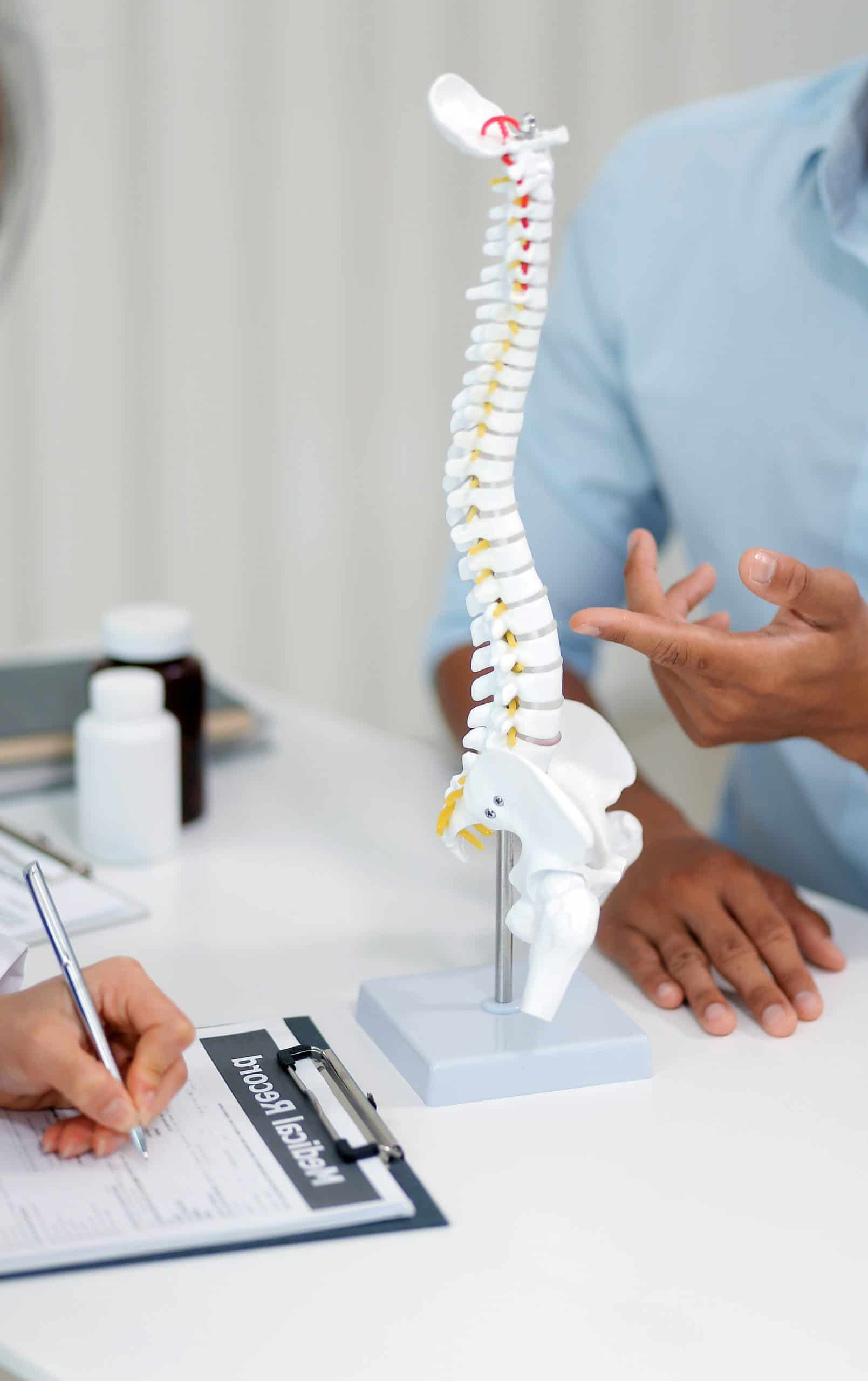
Your first visit is usually the longest because it includes intake, history, examination, digital X-rays (if needed), and a discussion about what the findings mean. You should plan to bring a photo ID, your insurance card, any relevant scan or MRI reports you already have, a list of medications, and details about prior injuries or surgeries if they matter to your case. Wear comfortable, modest, non-restrictive clothing. Shorts and comfortable shoes are often helpful depending on the area being assessed.
The first visit typically follows a straightforward flow. We talk through your symptoms and goals, perform the physical exam, explain what appears to be going on, and outline what the treatment plan may look like. If treatment starts that day, it should make sense in the context of the exam rather than feeling random.
Follow-up visits are shorter and more focused. Early on, visits are often closer together when pain is irritable or movement is limited. Later, they usually space out as symptoms settle and you are doing more on your own. Home recommendations are meant to be practical and realistic. The goal is not to dump a twelve-step homework packet in your lap. It is to give you the right next few things to do well.

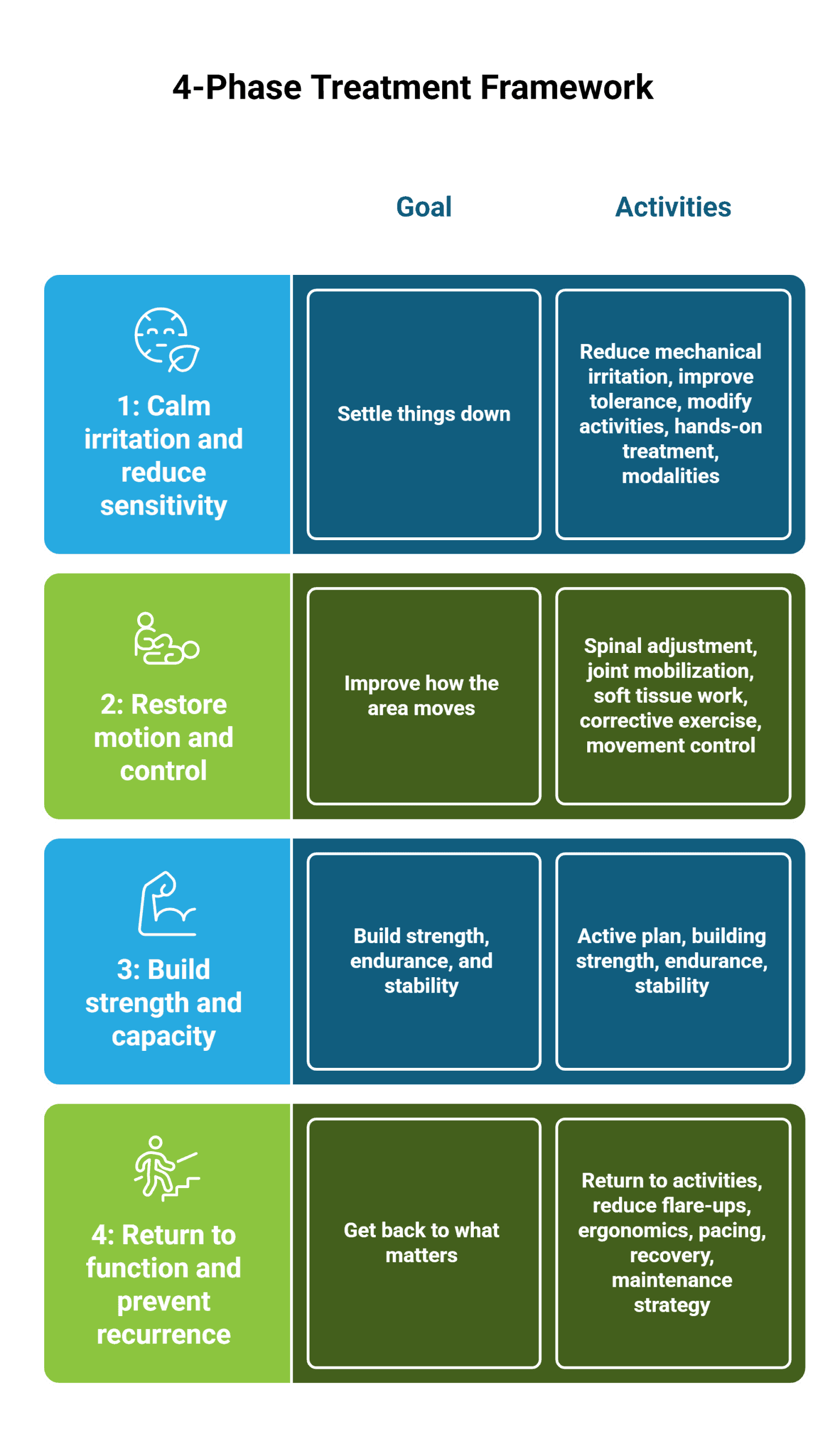
Our 4-Phase Treatment Framework
Phase 1: Calm irritation and reduce sensitivity
When pain is hot, the first goal is to settle things down. That may mean reducing mechanical irritation, improving tolerance for basic movements, modifying aggravating activities, and using hands-on treatment or selected modalities to help break the pain-spasm-guarding cycle.
Phase 2: Restore motion and control
Once symptoms are less reactive, the next step is improving how the area moves. That may involve spinal adjustment, joint mobilization, soft tissue work, corrective exercise, and better movement control through the neck, upper back, lower back, hips, or shoulders, depending on the problem.
Phase 3: Build strength and capacity
This is where the plan becomes more active. We start building the strength, endurance, and stability needed for real life. If your pain started because your body could not tolerate a demand, the answer is not only symptom relief. It is helping your body tolerate more.
Phase 4: Return to function and prevent recurrence
The final phase focuses on getting you back to the things that matter, whether that is work, lifting, sport, parenting, commuting, training, or simply moving through the day without thinking about pain every five minutes. We also look at how to reduce repeat flare-ups through ergonomics, pacing, recovery, and a manageable maintenance strategy.
That framework is not a rigid script. Some people move through it quickly. Some need more time in the early stages. The larger point is that treatment should have direction. For persistent low back pain and many neck-related problems, guideline-level evidence supports a person-centered approach built around education, staying active, exercise, and hands-on treatment used as part of a broader plan rather than a stand-alone fix. (World Health Organization)
Your Treatment Toolbox
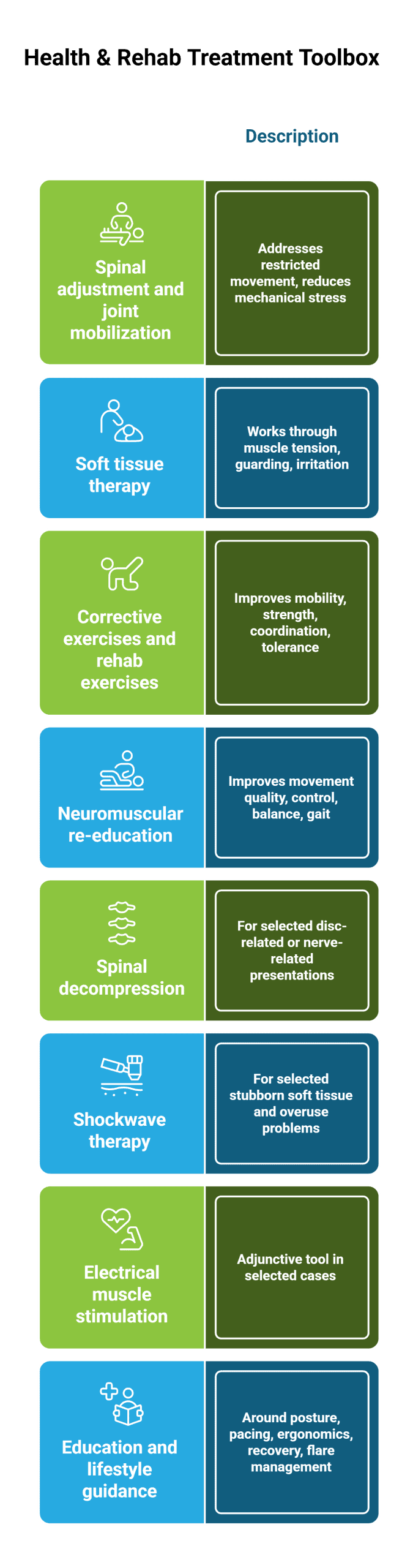
At Health & Rehab, your treatment plan is built around what your body actually needs. Depending on your presentation, Dr. Czekaj may use one or several of the following approaches in combination:
Spinal Adjustment and Joint Mobilization
When spinal joints lose normal movement, surrounding muscles compensate by tightening up, adding mechanical stress and driving recurring pain. Adjustment and joint mobilization restore proper movement, reduce that stress, and give the surrounding tissue the conditions it needs to settle.
Soft Tissue Therapy
Muscle guarding and tissue irritation often become their own obstacle, limiting movement and keeping recovery stalled. Soft tissue therapy works directly on the affected muscles and connective tissue to release tension and help the area become responsive to the rest of your plan.
Corrective Exercises and Rehab Exercises
Passive care reduces pain, but exercise builds the foundation that keeps it from returning. Corrective and rehab exercises are prescribed specifically to your case to improve mobility, strength, and physical tolerance for daily life.
Neuromuscular Re-Education
Chronic pain changes the way your body moves, often without you realizing it. Neuromuscular re-education retrains those altered patterns to improve movement quality, coordination, balance, and gait.
Spinal Decompression
For disc-related and nerve-related presentations, spinal decompression applies a gentle traction force that reduces pressure within the affected disc and creates the conditions needed for healing.
Shockwave Therapy
Stubborn soft tissue injuries often stall because the tissue has lost its ability to generate a proper healing response. Shockwave therapy stimulates the body’s repair process and resolves the chronic irritation driving persistent tendon and overuse problems.
Electrical Muscle Stimulation
Electrical muscle stimulation is used as a supportive tool in selected cases to reduce acute pain, decrease muscle spasm, and improve circulation in the affected area.
Education and Lifestyle Guidance
Understanding what is driving your symptoms and what you can do outside the clinic is one of the most important parts of getting better. Guidance covers posture, pacing, ergonomics, flare management, and habits that reduce the likelihood of recurrence.
The key is that passive treatment is not the whole plan. For lower back pain in particular, guideline-based management puts the emphasis on self-management, activity, and exercise, with manual therapy used as part of a treatment package rather than as the entire strategy. (NICE)
Evidence and Integrity Matter Here
Our approach is evidence-informed, which means we combine clinical judgment, a careful exam, your goals, and the best available guidance for conservative musculoskeletal treatment. In practical terms, that means we prioritize education, active rehab, measured progress, and hands-on treatment when it fits. We do not build plans around hype, and we do not assume every person with back pain, neck pain, or sciatica needs the same thing. (World Health Organization)
We also avoid the usual nonsense. No guarantees. No one-size-fits-all template. No endless passive visits with no clear goal. If you are not improving the way we would expect, we re-evaluate the diagnosis, change the plan, and if needed, refer for imaging or specialist input. That is part of responsible treatment, not a failure of treatment. (PubMed)
References
- WHO guideline for non-surgical management of chronic primary low back pain in adults (World Health Organization)
- NICE guideline: Low back pain and sciatica in over 16s: assessment and management (NICE)
- American College of Physicians guideline on noninvasive treatment for low back pain (PubMed)
- ACR Appropriateness Criteria: Low Back Pain (PubMed)
- Neck Pain Clinical Practice Guideline, JOSPT (APTA Orthopedics)

De-Identified Case Example
Here is the kind of case we commonly see in this office.
Patient profile: An active adult with a desk-based job came in with lower back pain and intermittent leg symptoms after several weeks of long sitting days and reduced exercise.
Starting limitation: Sitting tolerance was poor, bending felt sharp, walking felt tight, and workouts had stopped completely.
Assessment highlights: The exam suggested mechanical lower back pain with nerve irritation, reduced lumbar range of motion, hip stiffness, guarded movement, and reduced trunk control. No red flags were present.
Plan: Early treatment focused on calming irritation, improving movement tolerance, and reducing muscle guarding. Once symptoms settled, the plan shifted into mobility work, corrective exercises, and gradual loading. Hands-on treatment was used to support progress, not replace it.
Week 2: Sitting tolerance improved. Pain was still present, but flare-ups were shorter and easier to settle.
Week 4: Walking felt easier, bending was less guarded, and modified workouts had resumed.
Week 8 and beyond: The patient had returned to regular training with better confidence, better movement control, and fewer symptom spikes.
Outcome: The win was not just a lower pain score. The win was returning to work, movement, and exercise without feeling fragile.
Prevention plan: A short home program, better sitting breaks, and load management strategies helped reduce the chances of the same flare pattern returning.
Dr. Brandon Czekaj
Chiropractor
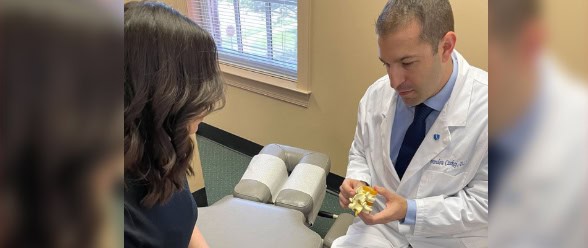
Health & Rehab Chiropractic is led by Dr. Brandon Czekaj, Doctor of Chiropractic, owner and chiropractor at the Centreville office. He has a background in biology from Xavier University, earned his Doctor of Chiropractic degree from Life University, is a Certified Chiropractic Sports Practitioner®, and is certified in Kennedy Decompression Technique. His clinical background includes sports-related treatment, treating car accident injuries, rehab-focused planning, and a strong interest in helping patients reach their health goals, not just a temporary fix.
What is it like to work with this office? Thorough, practical, and personalized. Patients are not pushed through a generic sequence. The goal is to understand the problem, explain the plan clearly, track progress, and be honest about what makes sense. If this is the right fit, we will tell you. If it is not, we will tell you that too.

What Patients Are Saying


Insurance, Referral, and Visit Details
Health & Rehab Chiropractic works with most insurance plans, and the team can help you understand the practical side before you get started. Because benefits vary from plan to plan, it is always smart to confirm coverage, copays, deductibles, and any authorization requirements ahead of time.
Your visit may include an exam, consultation, X-rays (if needed), diagnosis, treatment recommendations, and when appropriate, in-office treatment that matches the findings from your assessment. Some patients do not need a referral, while some insurance plans may still require one. The simplest move is to call the office with your insurance information so the team can help you understand what applies to you.
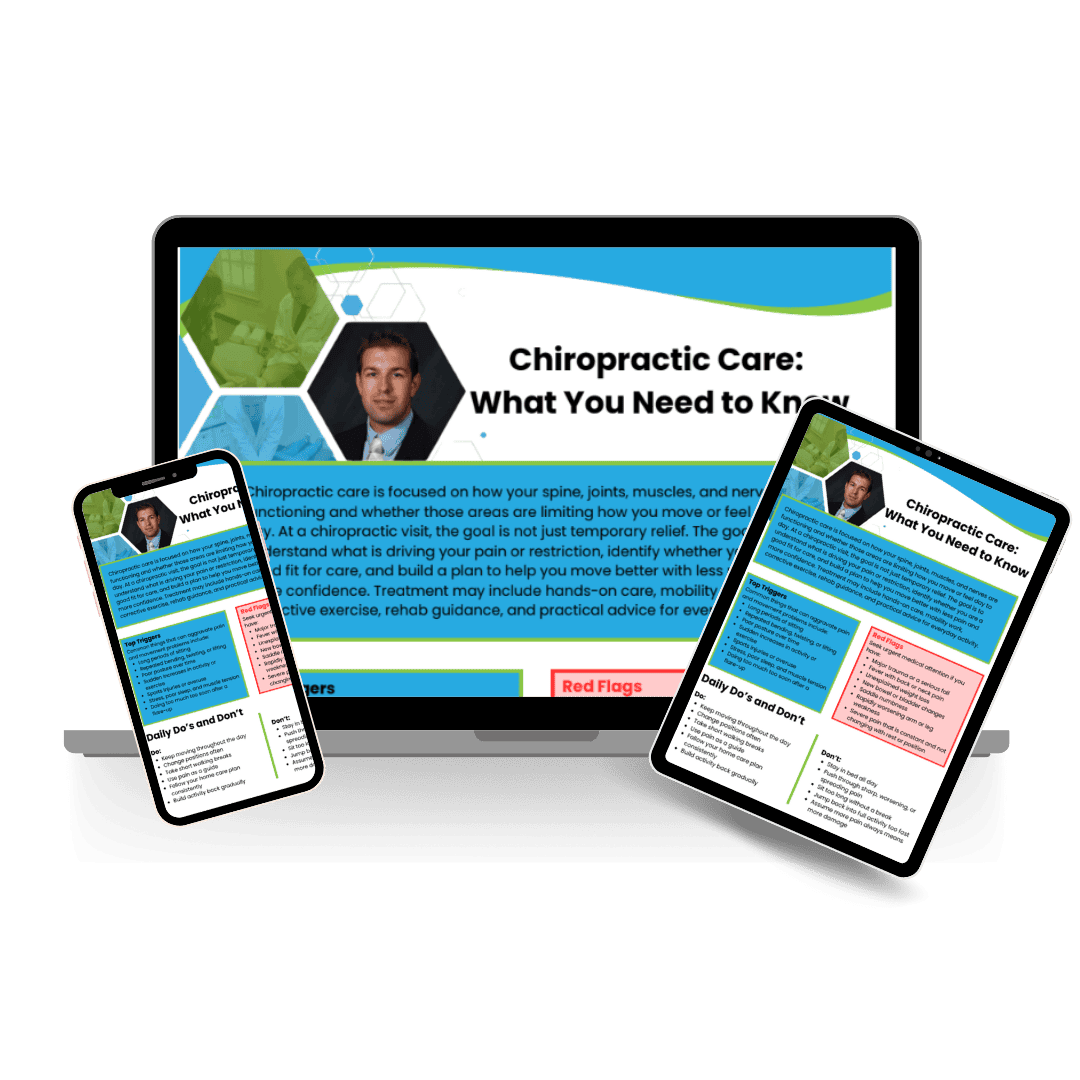
New to chiropractic care or not sure what to expect?
This free guide covers everything you need to know before your first visit and between appointments. Inside you will find a plain-language overview of what chiropractic care actually involves, the most common pain triggers, daily dos and don’ts for managing symptoms, starter exercises with dosage, a flare-day plan, and a return-to-activity checklist. It is practical, straightforward, and built for real life.
Watch Our Video: Why Chiropractic Care Might be a Good Fit
Frequently Asked Questions
Often, no. Some insurance plans still require one, so it is worth checking your benefits before your visit.
That depends on the diagnosis, how long the problem has been there, how irritable it is, and what you need to get back to doing. After the assessment, you should get a clearer plan instead of a vague shrug.
Your first visit is typically the longest because it includes history, examination, and plan discussion. Follow-ups are usually shorter and more focused.
Wear comfortable, non-restrictive clothing. Shorts are often useful, and shoes that are easy to remove can help depending on the area being treated.
Some treatments can feel intense, especially if the area is already irritated, but treatment should be controlled and tolerable. We will explain what is being done and why. Some patients occasionally feel mild soreness after treatment as their joints begin to move better. This is normal and typically temporary.
Then we re-check the diagnosis, the treatment strategy, and whether another referral, test, or co-managed approach makes more sense. Staying stuck without changing the plan is not acceptable.
Often, yes. Of course, it is important to first determine the underlying cause of the chronic pain. We have helped many patients find relief from chronic neck pain, back pain, headaches, and other long-standing conditions.
There is overlap. Both can help musculoskeletal problems. A chiropractor often combines spinal and joint treatment with exercise-based rehab, while physical therapy may lean more heavily toward exercise and movement retraining. The best fit depends on the person and the problem.
Yes. Depending on the findings, your plan may combine spinal adjustment, soft tissue therapy, decompression, shockwave, electric muscle stimulation, and rehab exercises.
Call the office first. The team can let you know the soonest available opening and what to bring so you are not left guessing or waiting.
Book a Chiropractor in Centreville, VA
If you have been searching for a chiropractor near me because back pain, neck pain, sciatica, headaches, whiplash, or a sports injury is getting in the way, start with a thorough assessment. We will listen, examine, explain what appears to be going on, and tell you whether this office is the right fit.
From there, the next step is simple: book your visit or call the office to talk it through.